Problems with Indian Education System and Its Future
- Letsdiskuss

- Mar 16
- 4 min read
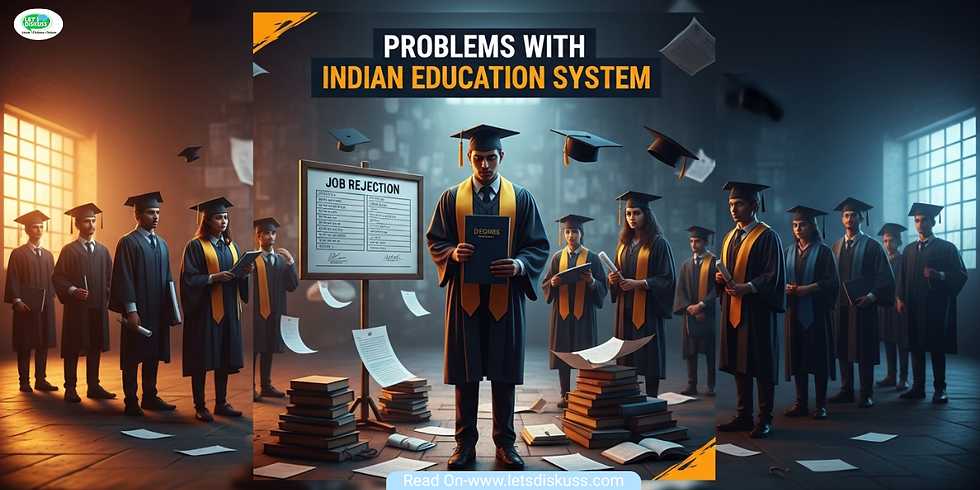
Education is one of the most important pillars of a country's development. A strong education system helps build skilled professionals, innovative thinkers, and responsible citizens. India has one of the largest education systems in the world, with millions of students enrolled in schools, colleges, and universities. However, despite its size and history, there are several problems with Indian education system that continue to affect the quality of learning.
From outdated teaching methods to lack of practical knowledge, many experts believe that the system requires significant reforms. In this article, we will explore the Indian education system reality, the drawbacks of Indian education system, compare foreign education vs Indian education, and understand the future of Indian education system.
Indian Education System Reality
The Indian education system reality is a mixture of achievements and challenges. India has produced some of the world's most successful professionals in technology, medicine, science, and business. Many Indian graduates work in leading global organizations and contribute to innovation worldwide.
However, at the ground level, the situation is quite different. Many schools lack proper infrastructure, updated teaching resources, and trained teachers. Students often focus heavily on scoring marks rather than gaining knowledge or skills.
Another major issue is the emphasis on theoretical knowledge. Students may study complex subjects for years, but they often struggle to apply those concepts in real-life situations. This gap between education and practical skills is one of the biggest challenges facing the system today.
Why Indian Education System is Outdated
One of the biggest concerns among educators is why Indian education system is outdated. Many aspects of the current system were designed during the colonial period, when education was focused mainly on producing administrative workers.
Although the country has developed significantly since then, some teaching methods and academic structures have not evolved at the same pace.
Rote Learning Culture
Rote learning is still very common in many schools. Students are encouraged to memorize textbooks rather than understand concepts deeply. Exams often reward memorization rather than creativity or analytical thinking.
Limited Focus on Creativity
Creative thinking, innovation, and problem-solving are essential skills in the modern world. Unfortunately, many traditional classrooms do not give students enough opportunities to explore these abilities.
Heavy Exam Pressure
Students often face intense pressure to perform well in examinations. Board exams and entrance tests determine their academic and career paths, which creates a highly competitive and stressful environment.
Drawbacks of Indian Education System
There are many drawbacks of Indian education system that limit its effectiveness.
Outdated Curriculum
In many institutions, the curriculum does not keep up with the rapidly changing job market. Emerging technologies, digital skills, and modern career paths are not always included in the syllabus.
Lack of Practical Education
Practical training, internships, and hands-on projects are limited in many educational institutions. As a result, students may graduate without sufficient real-world experience.
Unequal Access to Education
Education quality varies greatly between urban and rural areas. Students in cities may have access to better schools, coaching institutes, and digital learning tools, while rural students often face resource shortages.
Limited Career Guidance
Many students choose academic streams without proper understanding of career opportunities. A lack of career counseling can lead to confusion and dissatisfaction later in life.
Foreign Education vs Indian Education
The debate between foreign education vs Indian education highlights several differences in teaching methods and learning environments.
Student-Centered Learning
In many foreign universities, students actively participate in classroom discussions, presentations, and group projects. Learning is interactive and encourages independent thinking.
Flexible Subject Choices
Students in international education systems often have the flexibility to choose subjects across different disciplines. This allows them to explore multiple interests.
Focus on Skills and Research
Research, innovation, and skill development are key priorities in foreign education systems. Students are encouraged to work on projects, internships, and research activities.
In comparison, the Indian system still relies heavily on lecture-based learning and examination performance.
Is Indian Education System Effective?
Many people ask the question: Is Indian education system effective?
The answer depends on perspective. The system has produced many talented professionals who succeed globally. However, the effectiveness of education should not be measured only by academic results.
True effectiveness comes from preparing students for real-life challenges, career opportunities, and lifelong learning. In this area, the system still needs improvement.
Education should focus on developing skills such as critical thinking, communication, collaboration, and creativity. These abilities are essential for success in today's rapidly changing world.
Future of Indian Education System
The future of Indian education system depends on how well it adapts to modern needs. Fortunately, several reforms and technological developments are bringing positive changes.
Digital Education
Online learning platforms, virtual classrooms, and educational apps are transforming how students learn. Digital tools can help improve access to quality education across the country.
Skill-Based Learning
Educational institutions are gradually introducing skill-based courses that focus on practical training and industry relevance.
Modern Teaching Methods
New teaching approaches encourage problem-solving, innovation, and experiential learning rather than traditional memorization.
Education Reforms
Government initiatives and policy reforms aim to make education more flexible, multidisciplinary, and student-focused.
If these changes continue, the Indian education system can evolve into a more effective and globally competitive model.
Conclusion
The problems with Indian education system highlight the need for modernization and reform. While the system has several strengths, it must address challenges such as outdated curriculum, exam pressure, and lack of practical learning.
Improving the quality of education requires collaboration between policymakers, educators, institutions, and students. By embracing innovation, technology, and skill development, India can build an education system that prepares students for the future.
A strong education system not only benefits individuals but also contributes to the social and economic growth of the entire nation.
Must Read
If you enjoy exploring educational and historical topics, you may also find these interesting:


Comments